
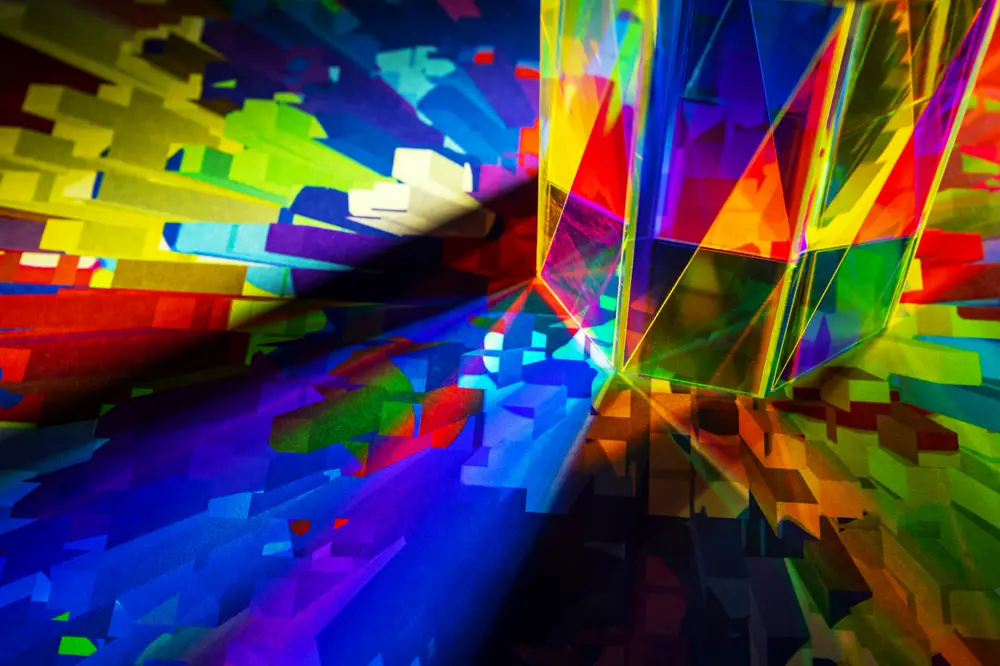
Light Refraction: Exploring the Science & Beauty
Have you ever wondered why a straw appears bent when placed in a glass of water? Or why rainbows arch across the sky after a rain shower? These captivating phenomena are all thanks to a fundamental property of light called refraction. Refraction isn’t just a scientific principle; it’s a beautiful display of physics in action, shaping how we perceive the world around us. This article delves into the intricacies of light refraction, exploring its causes, types, real-world applications, and the stunning visual effects it creates.
Light travels in straight lines, but its path changes when it moves from one medium to another – like from air to water, or from air to glass. This bending of light is what we know as refraction. Understanding this process unlocks a deeper appreciation for the optical illusions and natural wonders we encounter daily.
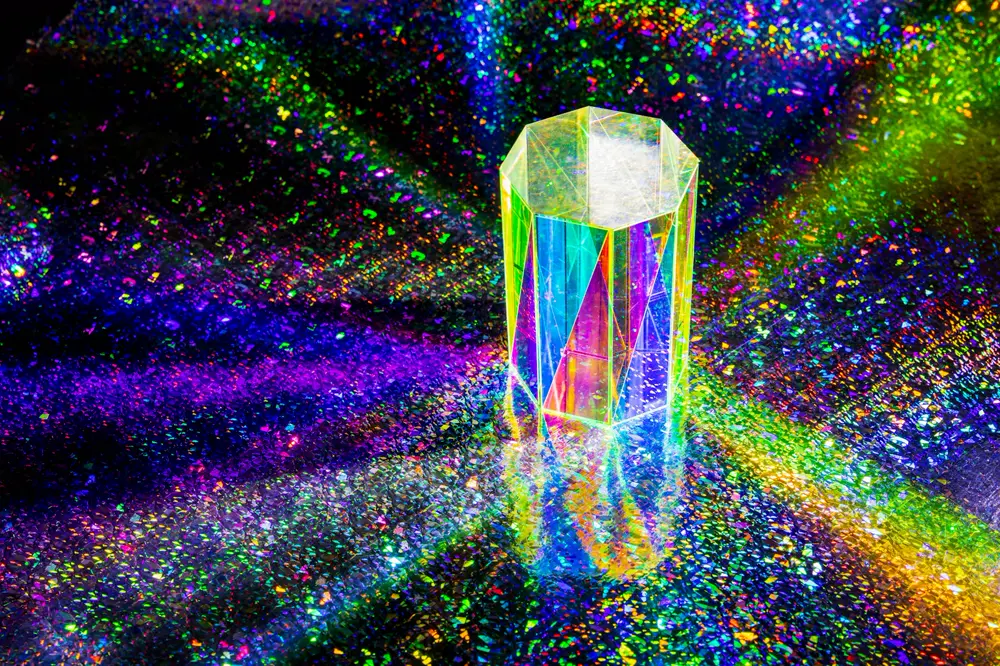
What Causes Light Refraction?
The core reason for light refraction lies in the change in the speed of light as it enters a different medium. Light travels fastest in a vacuum. When it enters a denser medium, such as water or glass, it slows down. This change in speed causes the light rays to bend. The amount of bending depends on the difference in the speed of light in the two mediums, quantified by a property called the refractive index.
The refractive index is a numerical value that indicates how much light slows down in a particular medium. A higher refractive index means a greater slowing of light and, consequently, more bending. For example, air has a refractive index of approximately 1.0, water around 1.33, and glass typically ranges from 1.5 to 1.9. This difference in refractive indices is why light bends when transitioning between these materials.
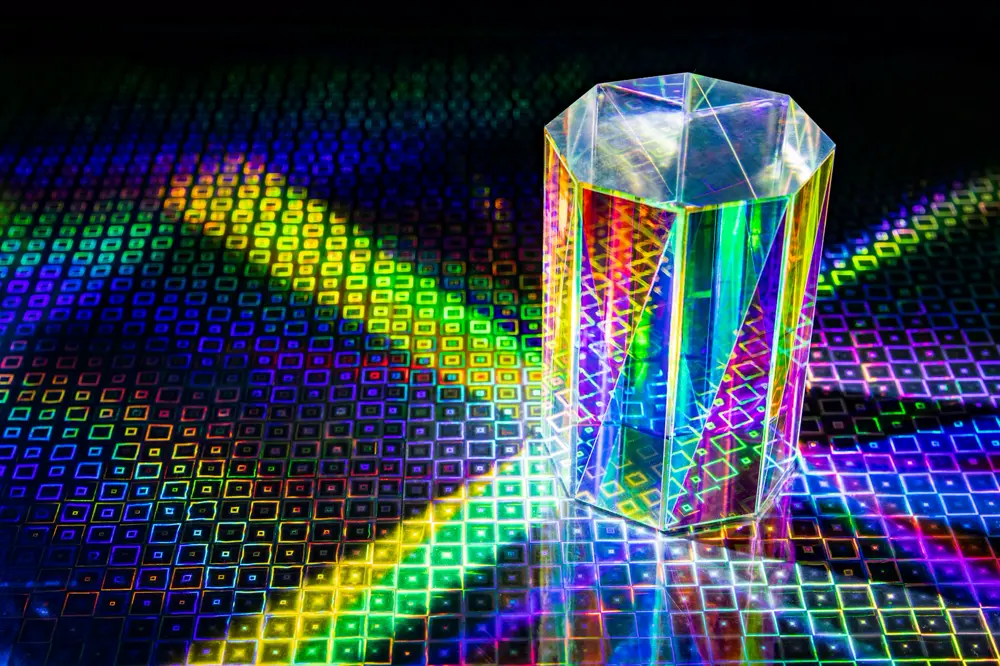
Types of Refraction
Refraction manifests in several distinct ways, each creating unique optical effects:
- Simple Refraction: This is the most common type, occurring when light passes from one medium to another at an angle. The straw in water example is a classic illustration.
- Double Refraction (Birefringence): Certain materials, like calcite, split a single ray of light into two rays, each traveling at a different speed and direction. This results in a double image when looking through the material.
- Internal Refraction: This occurs when light travels from a denser medium to a less dense medium. If the angle of incidence is large enough, the light doesn’t exit the denser medium but is instead reflected back internally – this is the principle behind fiber optics.
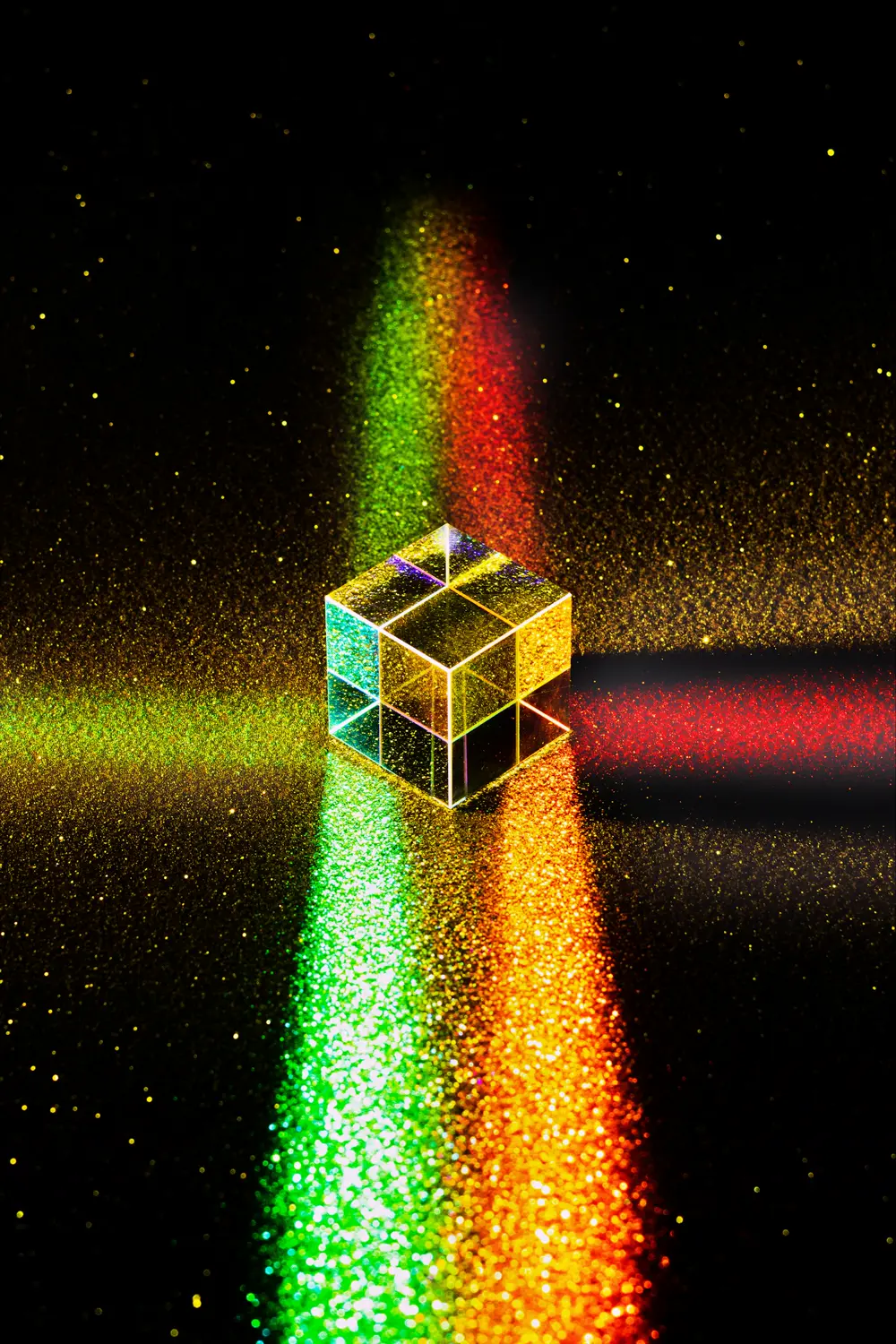
- Dispersion: Different wavelengths of light (colors) bend at slightly different angles when refracted. This separation of colors is what creates rainbows and the beautiful spectrum seen through a prism.
Real-World Applications of Refraction
Refraction isn’t just a theoretical concept; it’s a cornerstone of many technologies and everyday objects:
- Lenses: Eyeglasses, telescopes, microscopes, and cameras all rely on lenses to refract light and focus images.
- Fiber Optics: Used in telecommunications to transmit data as light pulses over long distances with minimal loss.
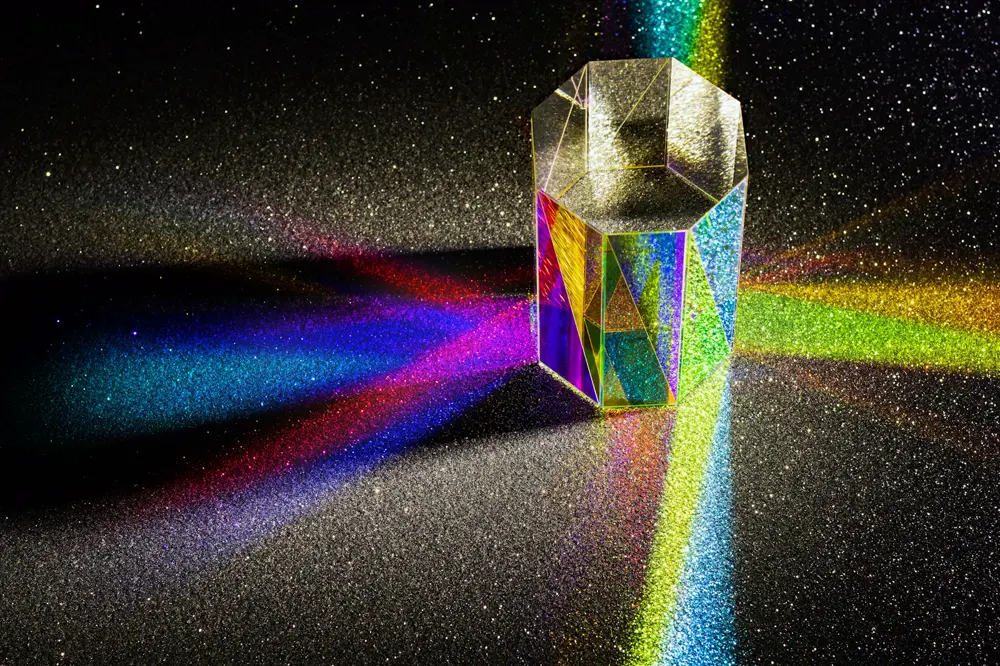
- Prisms: Used to separate white light into its constituent colors for scientific analysis and creating visual effects.
- Mirages: These optical illusions are caused by the refraction of light through layers of air with different temperatures and densities.
- Gemstones: The brilliance and sparkle of diamonds and other gemstones are due to the refraction and dispersion of light within their crystalline structure.
Understanding how light interacts with different materials allows us to manipulate it for a wide range of purposes. For instance, the design of corrective lenses depends entirely on accurately calculating the refractive properties of the lens material and the eye. You can learn more about how vision is corrected by exploring vision.
The Beauty of Refraction: Visual Effects
Beyond its practical applications, refraction creates some of the most stunning visual phenomena we experience. Rainbows, for example, are formed when sunlight is refracted and dispersed by water droplets in the atmosphere. The different wavelengths of light are bent at slightly different angles, separating them into the familiar spectrum of colors.
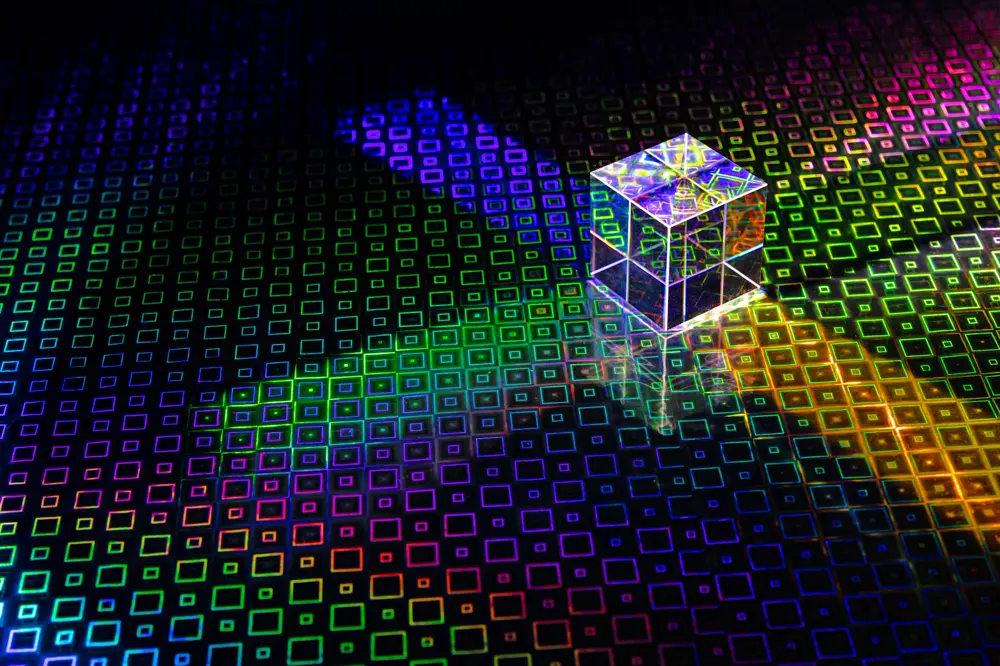
Another captivating effect is the shimmering appearance of objects underwater. This is due to the refraction of light as it travels from the water to our eyes, distorting the image and creating a wavy, distorted view. The way light bends can also create fascinating patterns and illusions, like the apparent bending of a spoon in a glass of water. The study of optics helps us understand these effects and even recreate them for artistic purposes.
The phenomenon of scintillation, the twinkling of stars, is also a form of refraction. As starlight passes through the Earth’s atmosphere, it’s refracted by turbulent air pockets, causing the star’s apparent position and brightness to fluctuate. This effect is more pronounced when the star is closer to the horizon, where the light travels through a greater amount of atmosphere.
Factors Affecting Refraction
Several factors can influence the degree of light refraction:
- Wavelength of Light: Different colors of light have different wavelengths, and shorter wavelengths (like blue) are refracted more than longer wavelengths (like red).
- Angle of Incidence: The angle at which light strikes the surface of a medium affects the angle of refraction.
- Temperature: Temperature changes can affect the density of a medium, altering its refractive index.
- Density of the Medium: Denser mediums generally have higher refractive indices and cause more bending of light.
These factors are carefully considered in the design of optical instruments to ensure accurate and clear imaging. For example, telescope lenses are often made from multiple types of glass with different refractive properties to minimize chromatic aberration – the distortion caused by the different refraction of different colors of light. Understanding optics is crucial for these designs.
Conclusion
Light refraction is a fundamental phenomenon that shapes our perception of the world. From the simple bending of a straw in water to the complex workings of fiber optic cables and the breathtaking beauty of rainbows, refraction is at play all around us. By understanding the principles behind this fascinating process, we gain a deeper appreciation for the intricate interplay of light and matter and the wonders of the natural world. It’s a testament to the elegance and power of physics, constantly revealing new insights into how things work.
Frequently Asked Questions
1. Why do objects appear to be in a different location underwater?
This is due to refraction. Light bends as it travels from water to air, changing the apparent position of the object. Your brain interprets light as traveling in straight lines, so it perceives the object to be in a location that doesn’t align with its actual position.
2. What’s the difference between refraction and reflection?
Refraction is the bending of light as it passes through a medium, while reflection is the bouncing of light off a surface. Both involve light interacting with matter, but in different ways. Reflection preserves the angle of incidence, while refraction changes it.
3. How do rainbows form, and why are the colors always in the same order?
Rainbows form when sunlight is refracted and dispersed by water droplets. The colors are always in the same order (red, orange, yellow, green, blue, indigo, violet) because each color is bent at a slightly different angle during refraction. Red light is bent the least, while violet light is bent the most.
4. Can refraction be used to create illusions?
Absolutely! Refraction is the basis for many optical illusions. By carefully controlling the shape and refractive properties of materials, it’s possible to manipulate how light travels and create distorted or misleading images.
5. Is refraction affected by the color of the light source?
Yes, refraction is affected by the color (wavelength) of light. This phenomenon is called dispersion. Shorter wavelengths, like blue and violet, are refracted more than longer wavelengths, like red and orange. This is why prisms separate white light into its constituent colors.
Related posts:

Collections like this one connect to a bigger light-refraction library — Crystal Prisms: Exploring Light, Color & Effects is a good thread to pull next.
Share this page with a friend who is hunting for a fresh background.
