
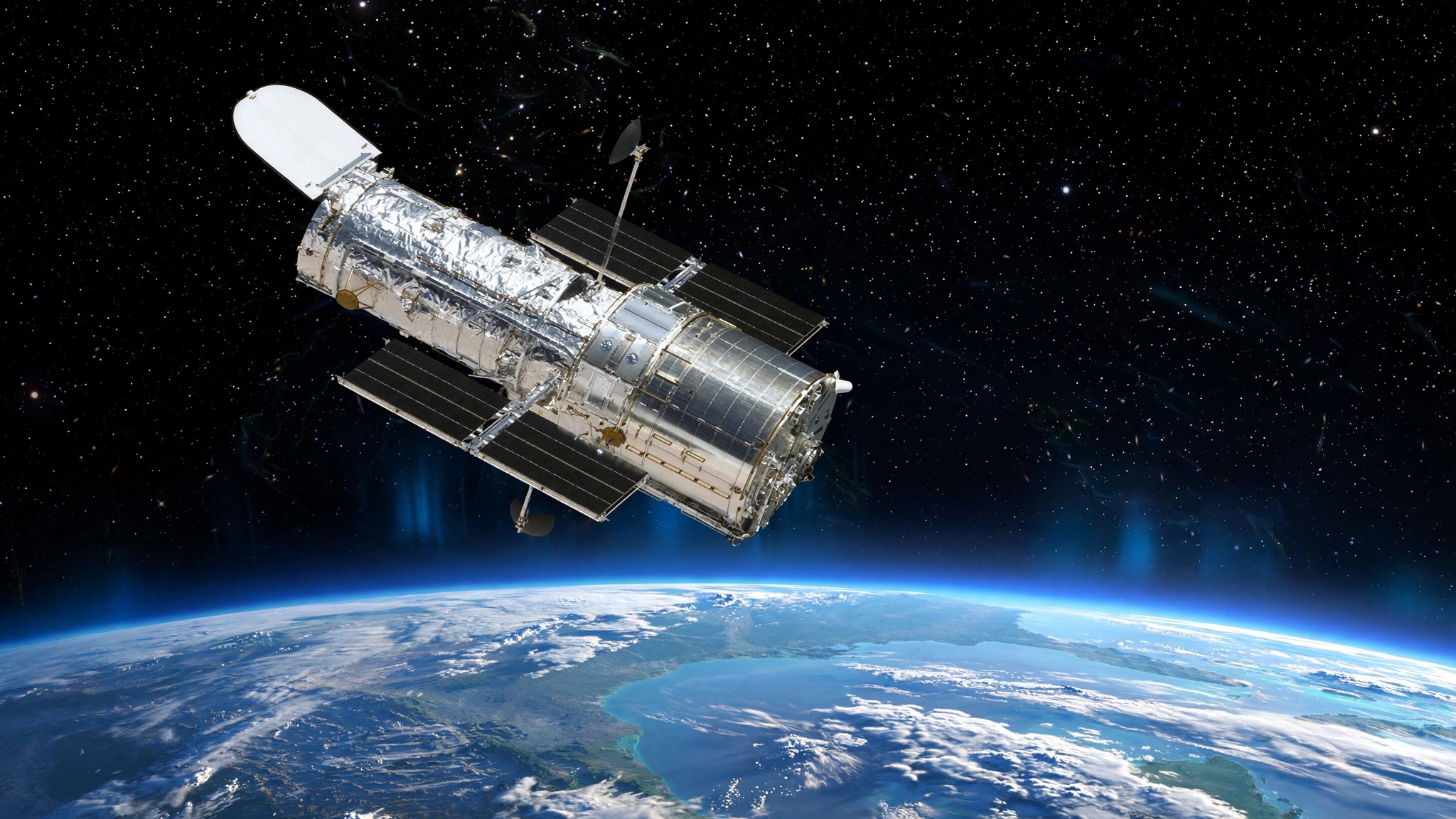
For thirty-five years, the Hubble Space Telescope has been humanity’s sharpest eye on the universe, gathering a million observations from its orbit above Earth. Anyone looking for a wallpaper with real cosmic depth will find it here, in nebulae, galaxies, and planets photographed with unprecedented clarity. This guide explains what makes Hubble imagery so powerful, which styles to choose, and how to build a collection worthy of the telescope that changed how we see.
Eyes on the Universe
Hubble’s story is a heroic arc: a flawed mirror, a daring repair, and redemption through discovery. Its images — the Pillars of Creation, the Deep Field, the planetary portraits — rank among the most significant photographs ever taken. They belong to everyone, and they were made to be shared.
As wallpapers, Hubble images deliver the universe at its best. The clarity, the color, and the depth make backgrounds of cosmic truth. These are screens for people who want the real thing.
Signature Hubble Styles
Four styles define the Hubble wallpaper canon, each with its own mood. They range from the abyssal depth of the deep fields to the intimate detail of nearby planets. Browsing broader space galaxy wallpapers alongside them shows how Hubble’s shots anchor the whole cosmic genre.
- Deep fields — thousands of galaxies gathered in a single frame
- Nebular icons — the Pillars of Creation and the cliffs of Carina
- Planetary portraits — Jupiter’s storms and Saturn’s rings up close
- The telescope itself — the silver observatory photographed above Earth
Deep Fields
The deep fields are the ultimate images: thousands of galaxies in the Hubble Deep Field, ten thousand in the Ultra Deep Field, and the faintest lights in the eXtreme Deep Field. Every speck is a galaxy, so the image reads as a census of the universe. The darkness, paradoxically, is the fullest light.
Set one as your background and your screen becomes the deepest look ever taken. Few images humble and inspire in equal measure. The wallpaper becomes the universe’s depth, framed.
Nebular Icons
The famous clouds — the Pillars of Creation, the cliffs of Carina, the Eagle’s grandeur — are Hubble’s greatest hits. They defined the telescope in the public imagination and turned the cosmos into an art gallery. Their sculpted gas and towering structure reward large, bright displays.
Planetary Portraits
Hubble’s home beat is the solar system’s family album: Jupiter’s storms, Saturn’s rings, the dust of Mars, and shimmering auroras. These portraits show our neighbors in portrait-ready detail, clarified to a standard other space imagery still chases. On a phone, high-res space wallpaper options for iPhone bring that same planetary sharpness to the small screen.
The Telescope Itself
Meta-wallpapers honor the instrument itself: the silver tube against Earth, the servicing missions, the astronauts at work. They photograph the eyes themselves — the observer, observed. Hubble’s vantage over Earth gives these shots their quiet drama.
The Flaw, the Fix, and the Servicing Missions
Hubble’s beginning was a crisis: spherical aberration from a two-micron error left its first images blurry, the world’s most famous mistake. The investigation traced the fault to a null corrector’s error and human oversight. The flaw became the story’s beginning, not its end.
The fix arrived through five servicing missions, spacewalks in which astronauts worked as surgeons and Hubble as the patient. The COSTAR correction and the Wide Field Camera’s installation restored and sharpened its vision. Each mission added upgrades, new instruments, and extended life.
These mission images form the telescope’s second story: gloved hands, replacement instruments, the blur corrected. They show the devotion behind the science and the risks taken so observations could continue. The repair, repeated across five missions, became part of the legend.
The Science’s Harvest and Hubble’s Heirs
The discoveries behind the pictures are immense: the universe’s age, its accelerating expansion, and the atmospheres of exoplanets. The discovery of dark energy — the accelerating expansion, recognized with a Nobel Prize — is the crown of that harvest. These results shifted the paradigm and left the cosmos stranger than imagined.
Successors with sharper eyes now carry the legacy forward, looking deeper still. Yet Hubble’s images remain the beloved ones: the first clarity, the iconic views, the telescope that taught us to see. The heir honors; the pioneer endures.
Hubble’s Twilight and Lasting Legacy
The observatory is aging: gyros failing, instruments wearing, the inevitable end approaching after thirty-five years of faithful service. Yet the legacy is permanent, because millions of observations sit in a public archive and still yield discoveries. The telescope may fall, but the vision remains.
That openness is Hubble’s greatest gift: the images are public, the wonder shared, the universe common property. Its true legacy is not only the pictures on our walls but the data in the archive. That archive is the raw material of future revolutions, observations that will outlive us all.
Build your collection like the mission itself: deep fields for depth, nebulae for beauty, planets for family, and the telescope for tribute. Choose your Hubble, set it as your background, and keep a little of that cosmic clarity in your day. Some wallpapers decorate; Hubble reveals — one photon at a time, for thirty-five years.
Related posts:


Collections like this one connect to a bigger 4k-space library — Blue Marble Wallpapers: Planet Earth From Space is a good thread to pull next.
Save your favourites and share the rest — good wallpapers travel fast.

